Why Clinics Are Adding HIFU in 2026
High-Intensity Focused Ultrasound (HIFU) remains one of the few non-invasive technologies that can reach the SMAS layer — the same foundational plane addressed in a surgical facelift — without incisions, needles, or downtime. For clinics, med spas, and premium salons, that translates into a high-margin, repeat-visit treatment. This guide covers what actually matters when you buy a HIFU machine.
How HIFU Works (and Why Depth Matters)
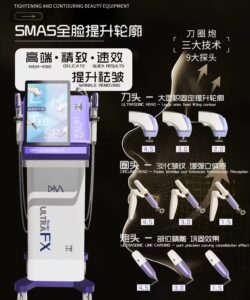
HIFU focuses acoustic energy at a precise subcutaneous depth, where it creates thermal coagulation points that trigger collagen remodelling. The result is gradual lifting and tightening over 8–12 weeks. The single most important buying factor is cartridge depth coverage:
- 1.5 mm – epidermis / fine lines
- 3.0 mm – dermis, skin texture
- 4.5 mm – SMAS, face lifting (the flagship depth)
- 6.0 / 9.0 / 13.0 mm – body contouring, belly and thigh tightening
A machine limited to 4.5 mm can only treat the face. If you want body applications, insist on the deeper body cartridges.
7 Key Criteria Before You Buy
1. Cartridge Range & Shot Count
Look for machines offering the full depth set (1.5–13.0 mm) with high shot-count cartridges (typically 10,000+ shots). Replaceable, affordable cartridges protect your margin.
2. 7D / 9D Multi-Row vs Single-Row
Multi-row (“7D/9D”) handpieces fire several lines per pass, cutting treatment time roughly in half versus single-row units — important for busy clinics.
3. Energy Stability & Cooling
Stable output prevents hot spots and patient discomfort. Active handpiece cooling improves comfort and lets you treat longer.
4. Certifications
For international (non-China) buyers, CE and ISO 13485 are the baseline trust signals. Verify the certificate is per-model, not generic.
5. Warranty & Training
12-month warranty plus remote diagnostics and on-site/online training materially reduces your risk.
6. MOQ & OEM
If you are a distributor, low MOQ (1–3 units) and OEM/ODM branding let you start small and scale.
7. Software & Protocols
Pre-set treatment protocols per body area speed up staff training and improve consistency.
Face vs Body: One Machine or Two?
Modern multi-depth HIFU machines handle both face lifting (4.5 mm) and body tightening (6–13 mm). If budget allows, a single full-depth unit covers most use cases; dedicated body HIFU is only necessary for high-volume body practices.
Recommended Starting Point
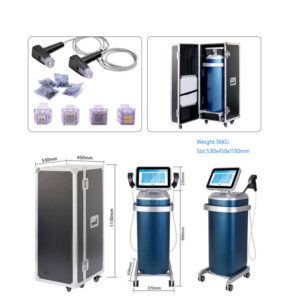
For most clinics, a 7D multi-row unit with the full cartridge set is the sweet spot. See the 3D HIFU Face Lifting Machine as a representative configuration.
Frequently Asked Questions
Is HIFU safe for all skin types?
Yes. Unlike lasers, HIFU is colour-blind and safe across Fitzpatrick I–VI, making it ideal for diverse client bases.
How many sessions does a client need?
Most see results after 1 session, with a top-up at 3–6 months. Maintenance every 6–12 months is typical.
Does HIFU hurt?
Patients feel warmth and mild prickling at the focus point. Cooling handpieces and lower-energy passes keep it comfortable.
Can HIFU replace a surgical facelift?
It lifts and tightens but does not remove excess skin. It is best positioned as a non-surgical alternative or maintenance between surgical procedures.
Bring this treatment to your clinic
SMIO supplies CE / ISO 13485 certified aesthetic devices with OEM, worldwide shipping and a 12-month warranty. Browse the full catalog →